Found Community ConversationsDominika & Sarah
Dominika and Sarah are friends and both are members of the Hands on Artists Co-Op which manages The Substation Arts Space in Paddington Brisbane.
Sarah: So how did you become involved in Hands on Artists?
Dom: It's a slightly winding story. In 2019, I developed carpal tunnel syndrome and couldn't continue working as a florist. I ended up on workers' compensation, and part of my rehabilitation involved finding volunteer work I could gradually build up to. I happened to walk past the building one day and wondered whether they might need help. I began assisting with social media, event promotion, and a large public art project called Art on Fences. Then I became involved in workshops. A few years later I received an email saying they were forming a co-operative and asking whether I'd like to participate. And here we are!
Sarah: I know you generally work with textiles and craft-based practices. I'm curious whether there are parallels between collage and your usual work?
Dom: Definitely. Textiles and collage both involve layers. Whether you're sewing fabric, weaving threads, or working with paper, you're building a piece through accumulation. That said, they're art forms that haven't really overlapped much in my own practice. I did think about introducing textile elements into this work, but the pieces I'm making are very small. There's simply no room.
Sarah: That's interesting because your textile works often exist on a much larger scale. What made you decide to work so small?
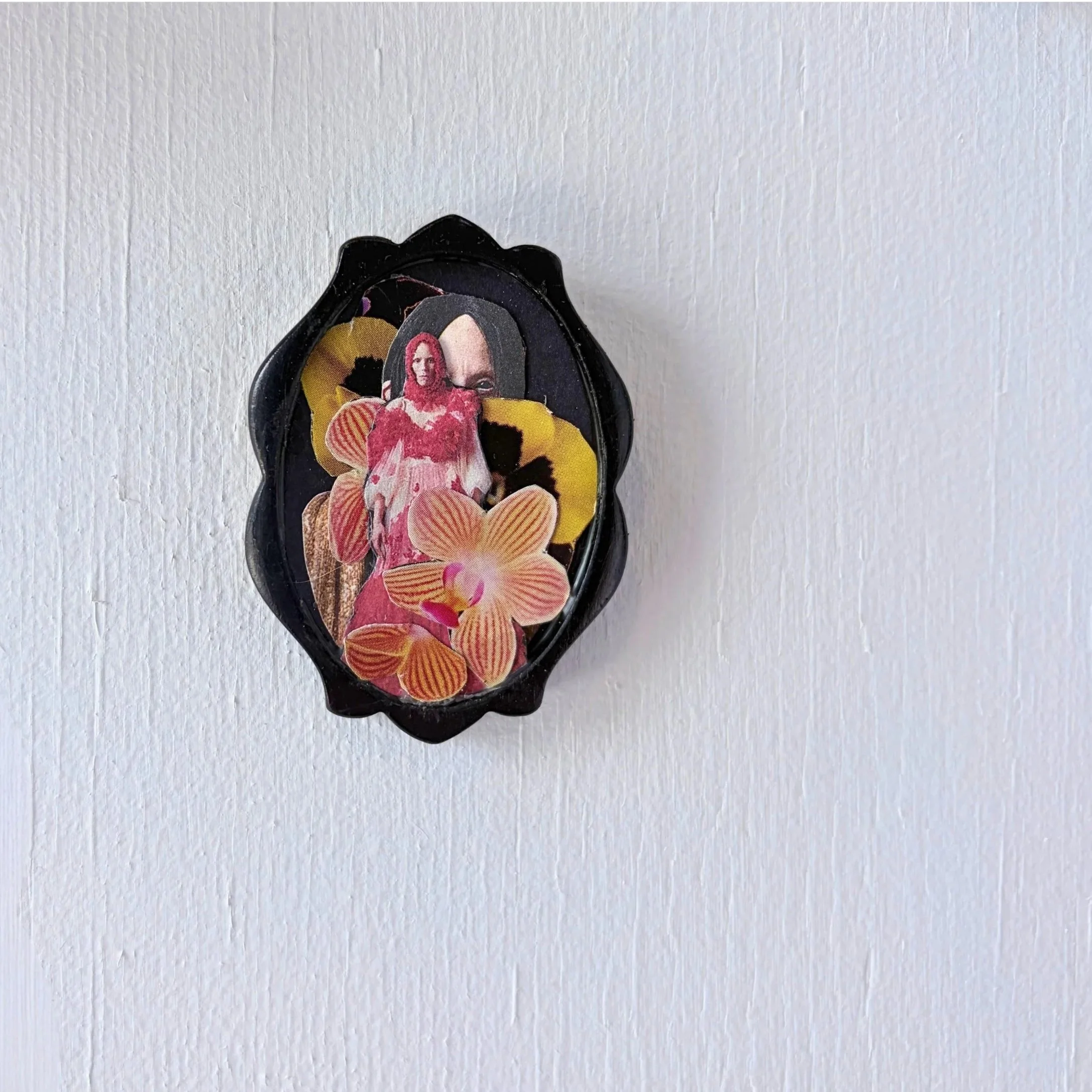
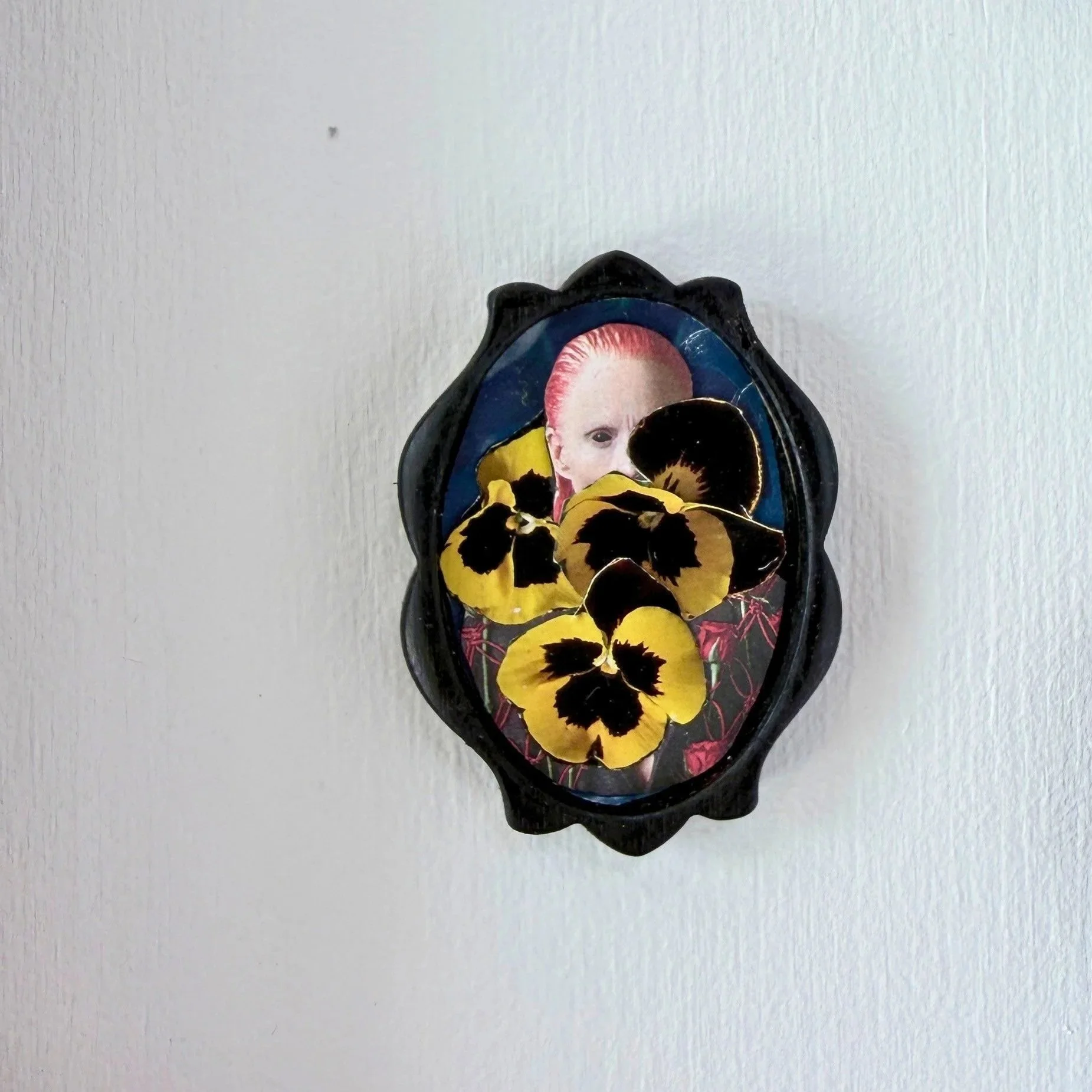
Dom: I've always loved miniature things. Even in textiles, I was constantly making tiny objects. At one point I made hand-felted pots for air plants that were only a few centimetres across. Ridiculously time-consuming. I love the way miniature objects force viewers to get close. There's an intimacy to them. When something is tiny, people have to slow down and really look. The images I'm using have incredibly intense gazes, and at that scale they're almost confronting.
Sarah: Absolutely. The faces are incredibly striking. I’m interested to know, at what point did you realise creativity was important for your wellbeing?
Dom: I think it happened when I was studying. I began university intending to study photography. Because the photography studios were being rebuilt, I ended up taking introductory textile classes. I completely fell in love with it. I was always making things as a kid, but textiles felt like an extension of something I already understood intuitively.
Sarah: You're Polish, and Poland has such a rich textile tradition. Did that feel familiar?
Dom: Strangely, no. I knew very little about Polish textile history while I was studying. It wasn't something I consciously explored. Then last year I went back and saw a major textile exhibition in Poland. Suddenly everything clicked. I realised I'd had this deep connection to textiles without understanding where it came from. It felt like reconnecting with part of my home country that I'd never really known.
Sarah: (tearing up) That makes me emotional! Sometimes we find an art form before we understand why it feels familiar. Then years later we realise we've rediscovered something embedded in our history.
Dom: Exactly. My grandmother sewed, knitted, and collected ribbons and trims. After she died, I inherited some of those materials and used them in my university work. Looking back, I can see those influences were always there.
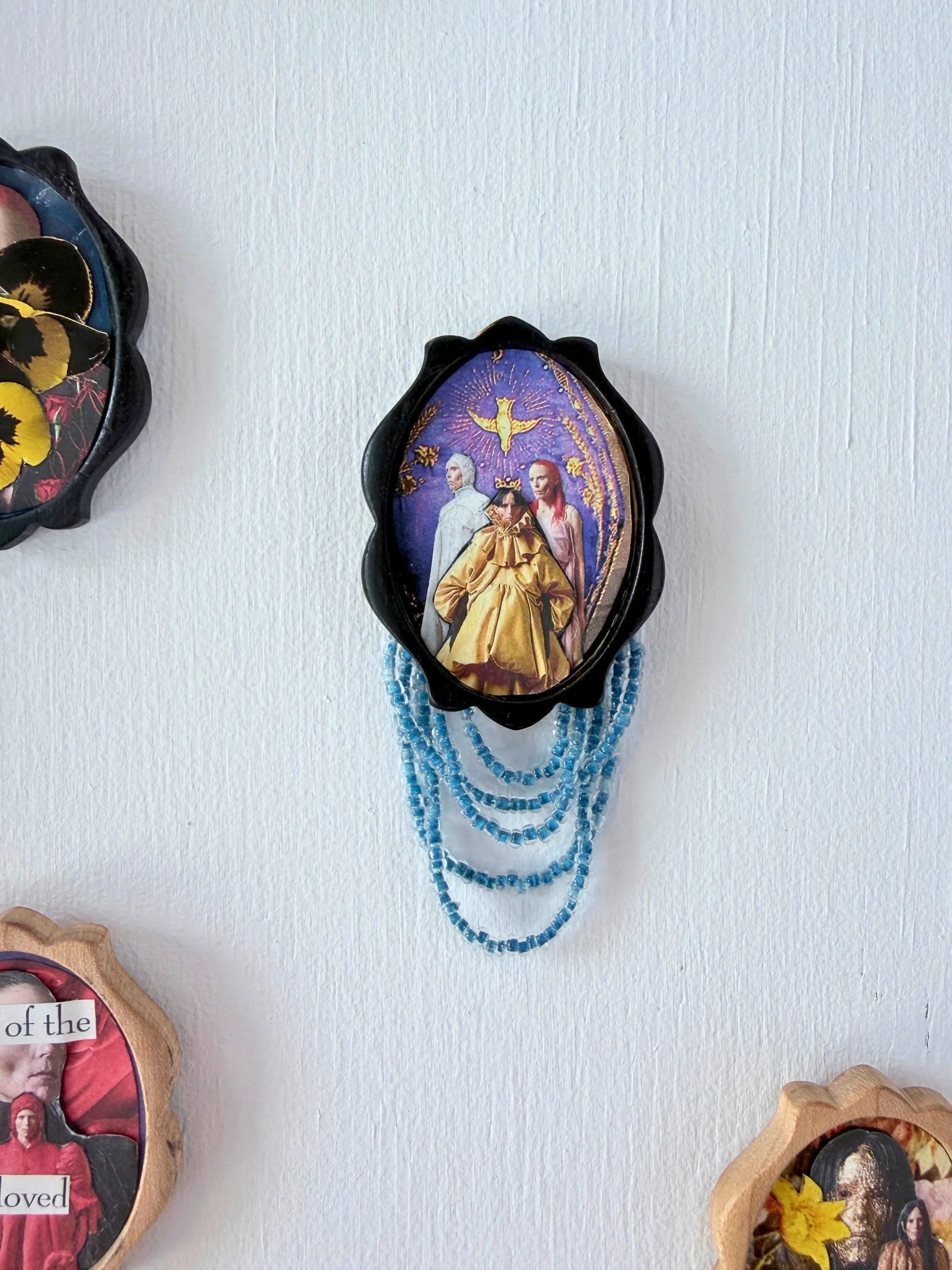
Dominika Deska, Alter/Altar , detailed views (2026).